


Healthcare and care organisations are operating in an environment where demands for efficiency, transparency and cost control are increasing rapidly. At the same time, they are expected to maintain high standards of care and provide a safe and dignified daily life for patients and residents. For many organisations, this means that internal processes need to be reviewed more systematically than before.
Meal payments are an area that rarely sits at the top of the strategic agenda, yet in practice they affect large parts of the organisation. Beyond finance and administration, these payment flows also impact the daily routines of staff, patients and relatives. When transaction handling is not clearly structured or consolidated into a single system, it risks creating an administrative burden that over time affects resource utilisation, workflows and the ability to follow up and analyse performance.
Challenges with separate payment solutions in healthcare and care services
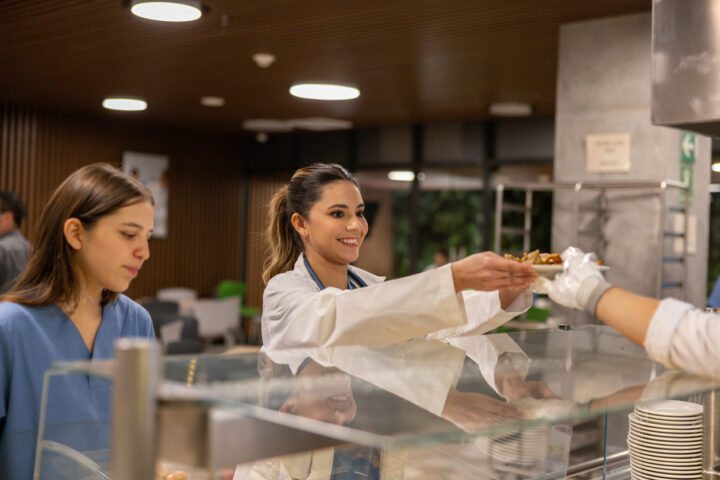
In both hospitals and care homes, meal services are often a central part of daily operations. Payments take place in multiple contexts, ranging from patient and resident meals to cafés, staff canteens and vending machines. These payment flows have often evolved gradually, with solutions tailored to local needs rather than designed from a unified, organisation-wide perspective.
When each payment point is managed through separate systems, complexity arises that is rarely visible at first but gradually affects the entire workflow. For finance departments, this often results in recurring reconciliation and consolidation work across multiple data sources, while healthcare and kitchen staff are frequently drawn into handling practical payment-related questions that interrupt daily routines. Over time, there is a significant risk that administrative tasks take up more space than necessary, reducing the efficiency of resource use in core operations.
In practice, this fragmentation can lead to, among other things:
- Lack of an overall view of costs and usage - When information is spread across multiple systems, it becomes difficult to gain a consolidated understanding of how meals are consumed and what costs actually arise over time.
- More complex analysis and follow-up - Comparisons between departments or units require manual work and data consolidation from multiple sources, making follow-up more time-consuming and less reliable.
- Delayed identification of deviations and inefficient routines - Limited access to consolidated data means that deviations are often detected only after the fact, once their impact has already affected operations.
- Increased complexity in traceability and compliance - Manual steps and unclear workflows make it more difficult to ensure correct handling and clear accountability, particularly in environments with high transparency requirements.
- More resource-intensive audits and internal reviews - When responsibilities and documentation are spread across several systems, audits and internal controls require more time and effort to complete.
Benefits of a unified payment solution for meal services in care environments
By consolidating all meal-related transactions into a single payment system, organisations create the conditions for a more consistent and long-term approach. This lays the foundation for clearer accountability, improved governance and simpler administrative handling. At the same time, more standardised routines are established, making payment processes easier to understand and use in everyday operations for both staff and those present in the organisation.

How unified payment flows impact finances and operations
Once the structure is in place, the effects become clear in how operations can be managed, monitored and staffed in practice. For organisations that consolidate meal payments into a single digital system, the benefits go beyond order and control — they also include more efficient resource use and lower administrative costs. Reduced manual handling frees up time and capacity, positively impacting both financial performance and operational efficiency. A unified payment solution can contribute to:
- Reduced administrative burden - Manual routines, parallel lists and time-consuming reconciliations are reduced, freeing up time for finance and operational teams to focus on higher-value work.
- Improved overview and follow-up - When transaction data is consolidated in one system, it becomes easier to monitor costs over time and make decisions based on actual data rather than estimates.
- Stronger internal control and compliance - Clear transaction trails and fewer manual steps reduce the risk of errors, simplify audits and strengthen compliance with internal policies and external requirements.
- More predictable workflows - Standardised payment processes reduce payment-related interruptions, creating calmer and more stable workflows for healthcare, kitchen and administrative staff.
- Scalability across the organisation - A unified structure makes it easier to manage organisational changes and expand operations without introducing new local payment solutions.
Additional benefits of a unified payment solution
Beyond financial and administrative effects, a unified payment solution also influences how daily life functions for those who are present in and around the organisation, particularly residents, patients and relatives. How payments are handled in practice often has a direct impact on workplace calm, clarity and the perceived quality of the service.
In both hospital environments and care homes, payments occur in multiple settings, such as cafés, shared spaces and for small everyday purchases. In aged care settings, relatives are often an active part of these situations. When payment handling is unclear or partly manual, questions, uncertainty and additional contact with staff frequently arise.
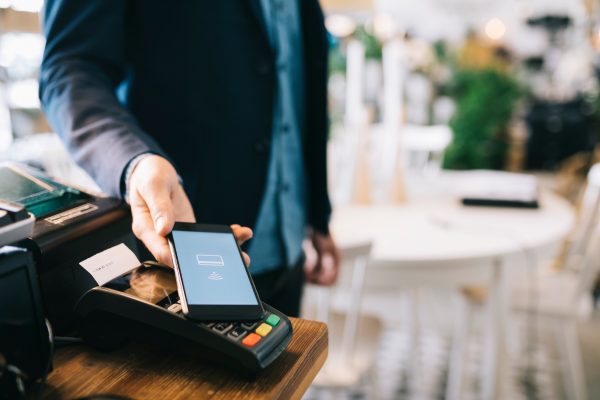
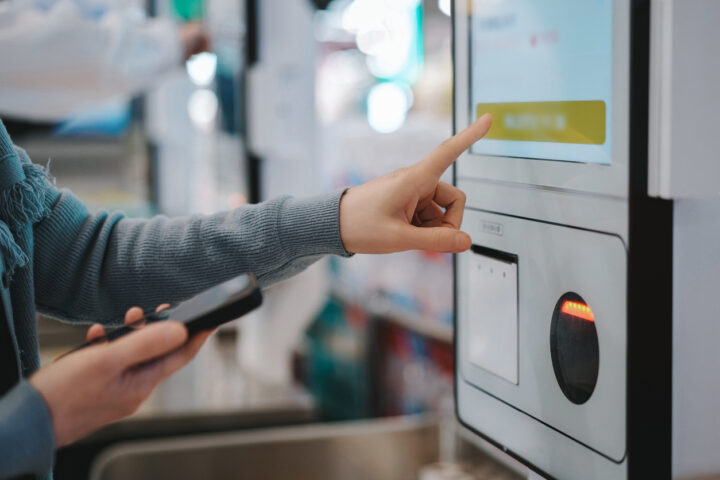
Digital and transparent payment solutions, with options for remote top-ups via tools such as top-up cards, reduce this burden. Balances and usage are easy to track, funds can be added remotely and the need for manual handling is minimised. At the same time, residents’ and patients’ independence and dignity are strengthened when they can make cashless purchases themselves, without staff needing to be involved in the payment process.
It is partly in response to these needs that Microdeb has been developed, as a unified, cashless payment solution for meals and small purchases in sectors such as healthcare and care services. By consolidating payments into a single system, organisations gain better oversight, reduced administration and smoother day-to-day workflows, without parallel systems or temporary routines.
Getting started with a unified payment solution for meal services
Implementing a unified payment solution is rarely an isolated IT project; it is a change that affects multiple parts of the organisation. A structured approach that considers both current processes and future needs creates better conditions for smooth implementation and long-term value. Key steps include:
- Map current processes - Identify where manual steps, inefficiencies or errors occur.
- Choose an integrated solution - Ensure the system supports scalability, ERP integration and secure online payments.
- Engage the right departments - Involve finance, meal services and operations to ensure a smooth implementation.
- Follow up and optimise - Continuously evaluate results and user feedback to improve and further develop the solution.
When payment flows become a stronger decision-making foundation
Meal payments are rarely viewed as a strategic issue, yet in practice they have a significant impact on how effectively an organisation can be monitored, governed and developed over time. When payment flows are consolidated into a unified and digital approach, they create a more reliable foundation for analysis, follow-up and decision-making.
Instead of fragmented information and manual consolidation, management and finance gain access to a clearer, more comprehensive view of costs, usage and operational patterns. This strengthens the conditions for long-term planning, better prioritisation and a more data-driven approach to governance.
Would you like to learn how Microdeb can simplify meal payments in your organisation and reduce administrative burden?
Contact us or fill out the form below and we will contact you as soon as possible!